

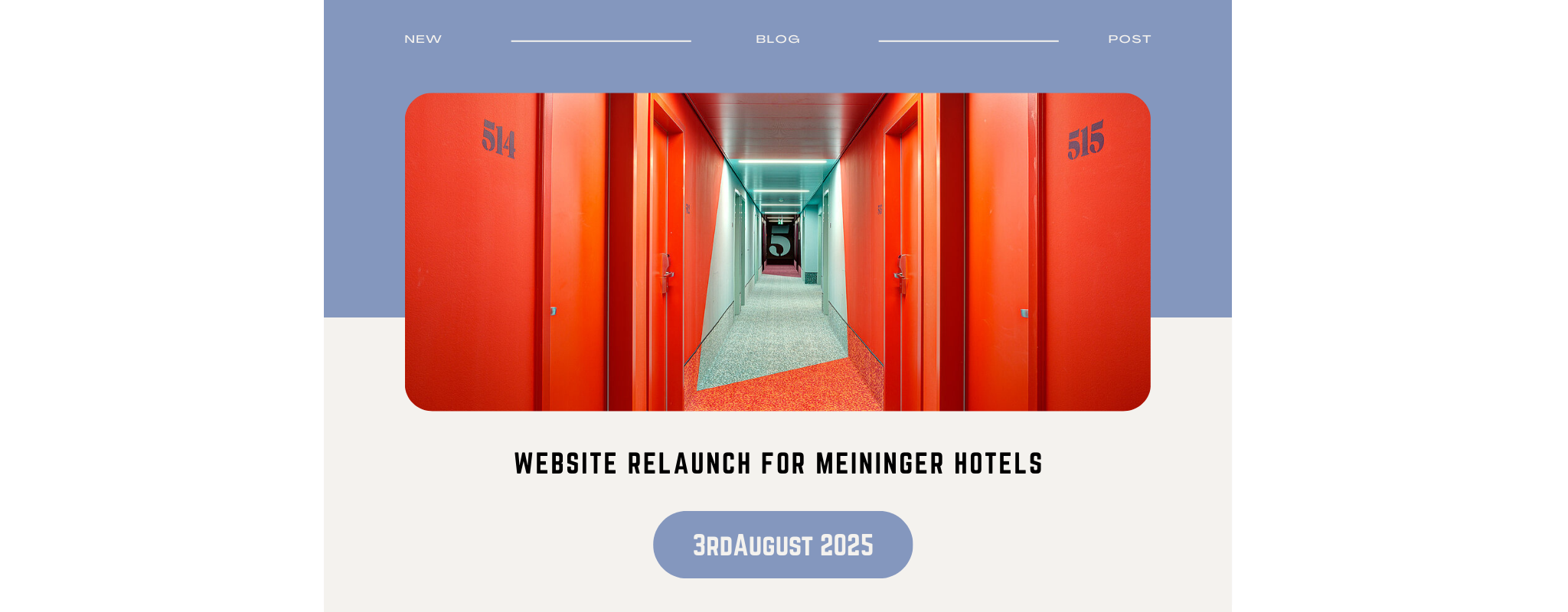
Relaunch with Vision: How MEININGER Hotels Rethought Its Website
The requirements for hotel websites have changed dramatically in recent years. Speed, mobile usability, relevant content, and an intuitive booking process now decide whether a website visitor becomes a guest – or not. MEININGER Hotels recognized this shift and implemented a comprehensive website relaunch that not only impresses technically but also delivers clearly measurable results.
What exactly is behind the project, how a complex hotel offering was translated into digital form, and what other hoteliers can learn from it – this article provides first-hand insights.
MEININGER Hotels: Hybrid Model with an Urban Character
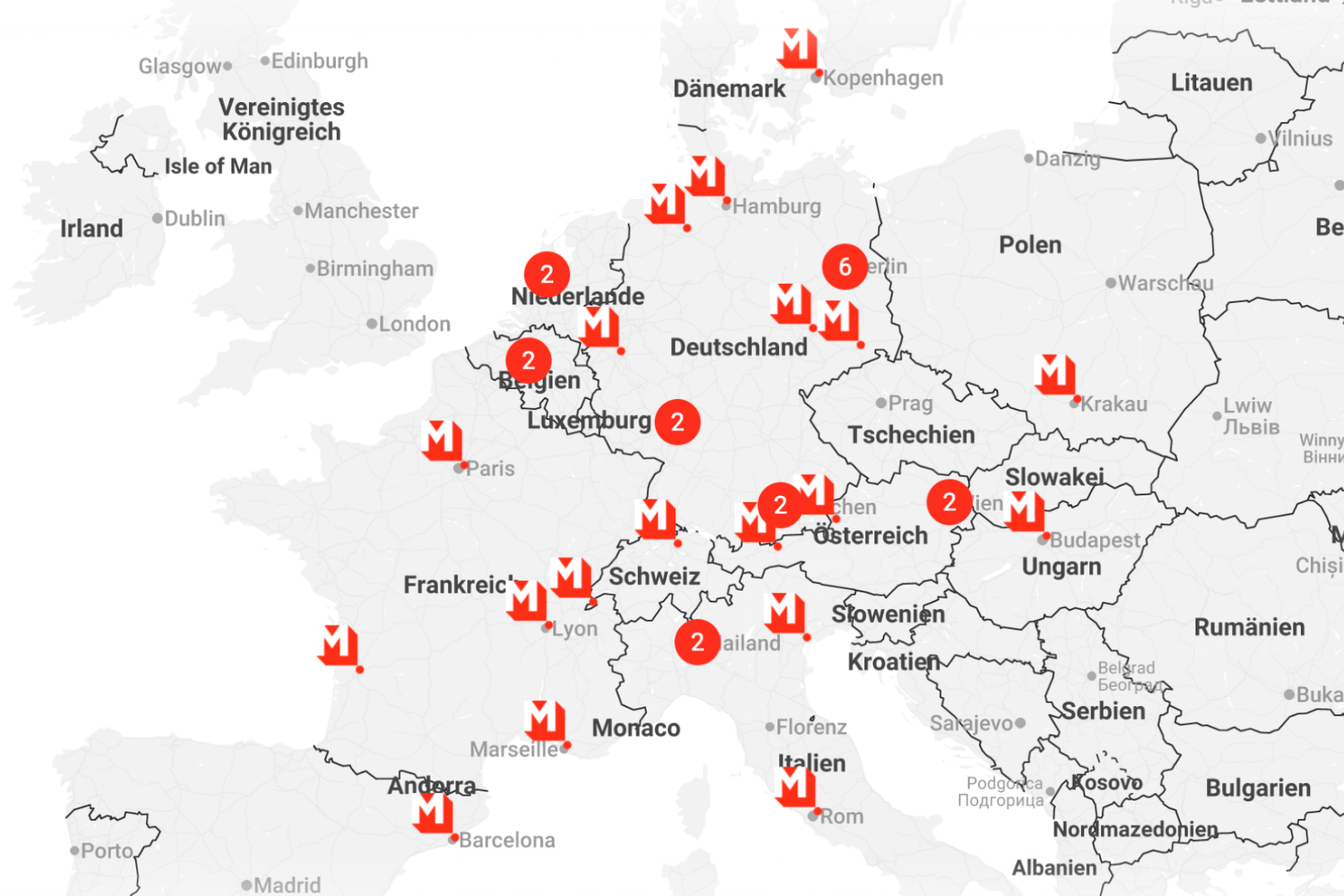
MEININGER Hotels is an international hotel group based in Berlin, currently with 36 properties in more than 25 European cities. The company stands for a hybrid hospitality concept that combines the advantages of a classic hotel with the flexibility and social character of a hostel.
This means: guests can choose between private single and double rooms, multi-bed rooms for groups or families, as well as communal areas such as guest kitchens and lounges. This versatility makes MEININGER an attractive option for a wide audience – from budget travelers and backpackers to business travelers and families.
Through strategic expansion into urban destinations such as Paris, Vienna, Amsterdam, and soon Barcelona and Edinburgh, MEININGER is deliberately focusing on high-growth international markets. Digitalization and direct booking play an increasingly central role – and at exactly this interface, the relaunch of the website marked an important step toward the future.
(Kopie 1)
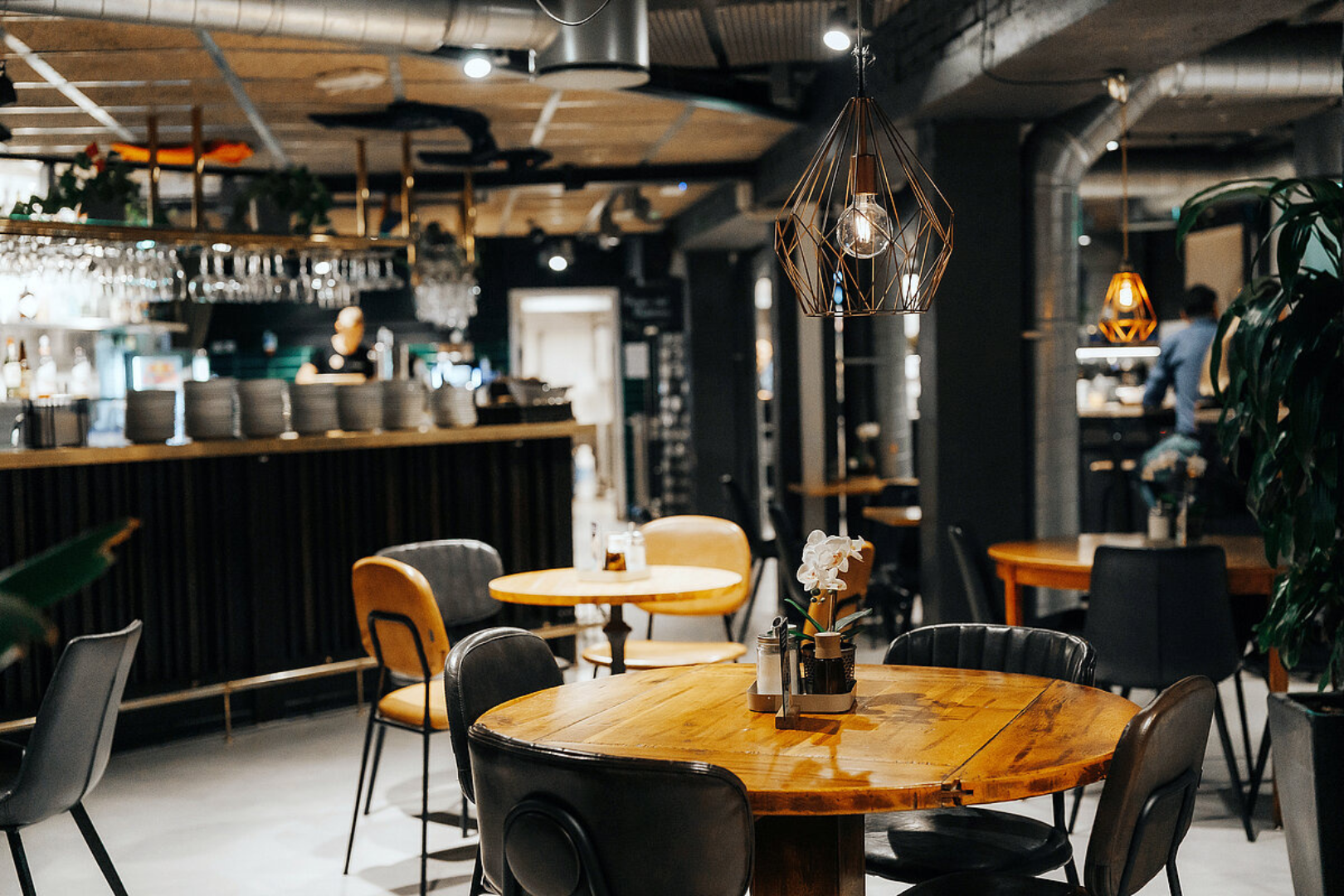
Why MEININGER Rethought Its Website
Digital requirements are evolving rapidly – especially in hospitality. For MEININGER Hotels, this led to the decision not just to redesign but to completely reconceptualize the website.
The existing site offered many areas for improvement: performance was outdated, the content management system lacked flexibility, and the mobile user journey no longer met today’s standards. Added to this was the desire to communicate the digital brand identity more clearly while better supporting booking behavior.
The goal was to create a future-proof website that:
- Loads quickly and runs stably
Load times were brought to a competitive level to reduce bounce rates and improve user experience. At the same time, technical infrastructure was optimized to perform reliably – even under heavy traffic and with multiple language versions. - Works intuitively on mobile devices
Mobile use was central to the redesign from the beginning. Clear information architecture, large touch targets, and streamlined navigation ensure that users can find their way easily even on small screens. - Sustainably improves conversion rates
The relaunch wasn’t just meant to look better – it was meant to perform better. Every click was reconsidered, every funnel optimized – with the clear goal of generating more direct bookings. - Structures content SEO-friendly
Clean HTML, fast load times, precise metadata, and target group–specific content in eight languages ensure that relevant pages are easier to find in search engines – guiding users to the right content. - Makes MEININGER’s hybrid brand identity tangible online
The unique MEININGER concept – combining hotel comfort with hostel charm – was also to be reflected online. This meant redesigning not only the visuals but also the tone of voice, imagery, and user flow to match the hybrid brand experience.
Strategic Preparation Instead of Quick Fix
Before touching design, code, or content, the digital team started with an intensive analysis phase. This preparation proved crucial to later success – and offers a lesson in data-driven digital marketing.
MEININGER’s approach included:
- Web analytics with Google Analytics to identify user behavior and drop-off points
- Heatmap tracking to visualize click patterns and frustration zones
- User testing across devices to collect real feedback
- Cross-department surveys to incorporate requirements from operations to revenue management
- Competitive benchmarking to understand industry standards and differentiate deliberately
This data-driven approach formed the foundation for all subsequent steps and helped reimagine the website from both user and business perspectives.
(Kopie 2)
Content & Structure: Relevance for Diverse Target Groups
MEININGER Hotels appeals to very different audiences – from families to backpackers to business travelers. One of the biggest challenges was structuring content so that each group quickly finds what matters to them without distraction.
The central lever was a clear content strategy:
- Many texts were created from scratch instead of simply revising old ones
- Page structure was organized by target group, with dedicated content for families, groups, couples, etc.
- Eight language versions were developed natively – instead of mere translations that often lose cultural nuance
- The tone of voice was refined to reflect the brand identity: authentic, accessible, digital
This strategic repositioning not only improved the user experience but also significantly boosted rankings for relevant search queries.
Mobile First: User Experience on the Go
More and more hotel bookings are made on smartphones – no longer a side trend. MEININGER took this seriously and designed the new site with a mobile-first approach. That means the user journey was designed for mobile devices from the start, not adapted later.
In practice, this meant:
- A clear visual design language with generous typography and smooth animations
- Dynamic components like collapsible or slide modules for room and rate info, keeping content tidy on small screens
- An intuitive booking process: users first select the right room, then see rates or add-ons
- A focus on visual storytelling: images and videos conveying the unique MEININGER atmosphere
This mobile optimization paid off – not just in user behavior, but also in mobile Google search performance.
(Kopie 3)
Personalization & Conversion: The Decisive Factor
What separates many hotel websites isn’t design – it’s how they address user intent. MEININGER integrated and expanded extensive personalization features during the relaunch, tailored to different target groups and user contexts.
These include:
- Dynamic widgets displaying content and offers by audience (e.g., family discounts on family pages)
- Price comparison modules to build trust and transparency
- Individual promo codes triggered by source channel or selected property
- Reminders for returning users, such as previously viewed rooms or current specials
This personalization starts on the homepage and subtly accompanies users throughout the booking funnel.
The Results: What the Relaunch Delivered
After twelve months, MEININGER can present concrete results – showing the relaunch delivered not just design awards but real business impact.
Key KPIs:
- +25% conversion rate year over year
- Load time reduced to approx. 2 seconds
- +15% visibility on Google in German-speaking markets
- Significantly lower bounce rate, indicating higher relevance and better usability
These numbers demonstrate how closely technical optimization, content quality, and user focus are interlinked.
Looking Ahead: What’s Next
The digital journey at MEININGER did not end with the relaunch. The team continues to work on new features to further enhance the user experience.
Planned or already in rollout:
- A new self-service portal for guests to manage bookings independently
- Web check-in to reduce on-site waiting times and digitize the arrival process
- Online booking of extras such as breakfast, late check-out, or pet options
These features directly address the expectations of modern travelers – especially international and digitally savvy guests.
Conclusion: What Hoteliers Can Learn from MEININGER
The MEININGER Hotels website relaunch is more than a digital makeover – it’s a prime example of holistic digital transformation in hospitality. The project shows impressively:
- Without strategic analysis, there is no sustainable success
- Content must fit the audience – not just the CMS
- Mobile first is more than design – it’s information architecture
- Personalization pays off when it adds real value
- Conversion is no accident – it’s the planned result of UX and relevance
Anyone aiming for digital growth in hospitality cannot avoid a structured relaunch process. MEININGER has shown how it’s done – practical, data-driven, and with a clear business impact.